
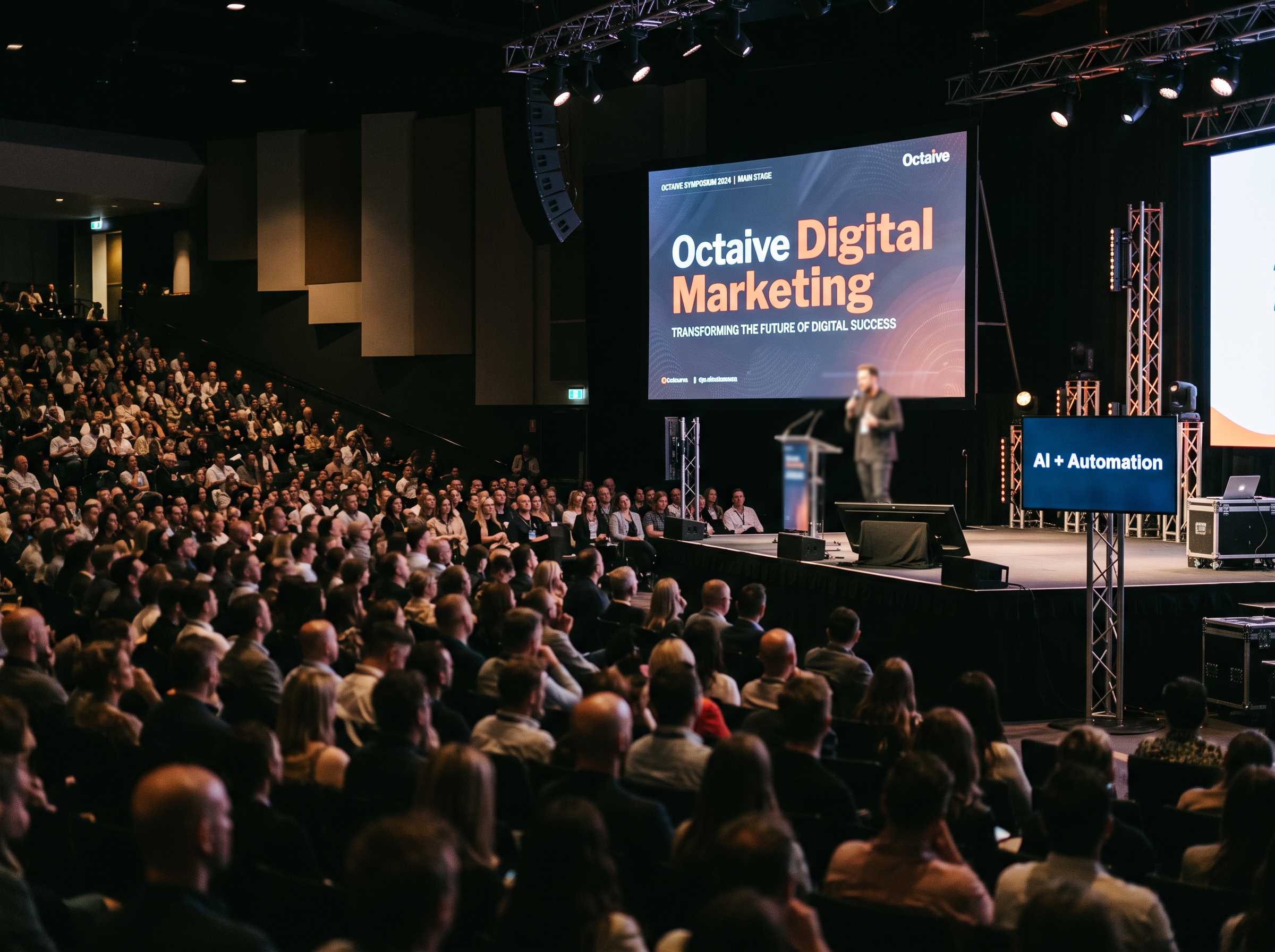
Every CEO dreams of the efficiency AI automation promises — leaner teams, faster pipelines, and predictable growth. But behind the glossy demos lies a graveyard of DIY disasters. As a Digital Marketing Agency Sunny Isles executives increasingly rely on, Octaive has seen firsthand what happens when automation is rushed, misconfigured, or deployed without strategy. Businesses in Sunny Isles and beyond are learning the hard way that automation without expertise can cost more than it saves.
Consider the story of a mid-sized SaaS founder who nearly lost his email domain reputation after deploying an AI-driven outbound campaign without proper warm-up sequences. Within 72 hours, his emails were flagged as spam across major providers, and six months of pipeline evaporated. The reassuring part? After partnering with a professional team, he rebuilt his sender reputation in under 90 days, recovered 80% of his lost pipeline, and now runs a fully compliant automation stack heading into 2026. The lesson: automation isn't the enemy — improper implementation is.
The Most Common AI Automation Horror Stories
When CEOs try to DIY complex automation stacks, the same mistakes repeat themselves across industries. These aren't hypothetical — they're recurring nightmares that quietly erode brand credibility, sales performance, and internal morale. Before scaling any AI initiative, leadership should understand the risks that come with unmanaged deployment.
- Data loss from misconfigured CRM syncs that overwrite verified contact records
- Broken workflows triggered by API changes no one monitored
- Spam-flagged email domains due to aggressive AI-generated outbound sequences
- Duplicate lead entries that confuse sales teams and inflate reporting
- Compliance violations from AI tools trained on unauthorized customer data
- Brand voice drift when generative AI produces off-message content at scale
- Silent failures where automations stop running but no alerts are configured
Each of these failures shares a common root cause: automation was treated as a plug-and-play solution rather than a strategic system requiring governance, testing, and continuous optimization. The team at Octaive regularly audits businesses that thought they were saving money by going solo — only to spend triple the recovery cost afterward.
Why a Digital Marketing Agency Sunny Isles Executives Trust Matters
The difference between automation that scales and automation that self-destructs comes down to expertise. According to a recent McKinsey report, "organizations that see meaningful bottom-line impact from AI are those with robust governance, dedicated talent, and clear risk mitigation frameworks." That's not something most in-house teams can build in a weekend.
Industry Trends: DIY vs. Managed Automation Outcomes
Comparing DIY Pitfalls to Managed Automation
To visualize the stakes, consider how the two approaches perform across the metrics CEOs actually care about — pipeline integrity, brand safety, and measurable ROI. The gap isn't marginal; it's structural.
| Risk Factor | DIY Approach | Managed Approach |
|---|---|---|
| Email Deliverability | Frequent blacklisting | Warmed, monitored domains |
| Data Integrity | Overwrites & duplicates | Validated sync protocols |
| Compliance | Ad-hoc, high liability | GDPR/CCPA governance |
| Reporting Accuracy | Fragmented dashboards | Unified attribution |
| Recovery Cost | 3–5x initial savings | Preventive, minimal |
Building Automation That Actually Works
Getting AI automation right isn't about picking the flashiest tool — it's about mapping technology to business objectives. A CEO's role is to demand systems that produce reportable outcomes, not vanity metrics. That means insisting on human oversight layers, quarterly audits, and integration testing before any AI touches a customer-facing channel. The team behind Octaive approaches every engagement with that governance-first mindset.
The Bottom Line on AI Automation Risks
AI automation failures rarely stem from bad technology — they stem from missing strategy, governance, and expertise. Businesses that partner with specialists avoid catastrophic data, deliverability, and compliance failures while unlocking measurable ROI. Treat automation as a system, not a shortcut, and the horror stories become someone else's problem, not yours.
Frequently Asked Questions
What's the most common AI automation failure for CEOs?
Email deliverability collapse. AI-generated outbound sequences without proper domain warming or personalization frequently trigger spam filters, damaging sender reputation for months and killing active sales pipelines overnight.
Can broken automation workflows be recovered?
Yes, but recovery is expensive and time-consuming. Most businesses recover 70–85% of lost performance within 90 days when they bring in specialists, though brand trust damage can linger significantly longer.
Is AI automation worth the risk for small marketing teams?
Absolutely — when implemented with proper governance. The risk isn't automation itself; it's unmanaged automation. Partnering with experts turns AI into a competitive advantage rather than a liability.
How often should automation systems be audited?
Quarterly at minimum. APIs change, data schemas drift, and AI models update constantly. Without regular audits, silent failures accumulate until they trigger a major incident that could have been prevented.
What should I ask before hiring an automation partner?
Ask about their governance framework, recovery protocols, compliance certifications, and reporting transparency. If they can't explain their monitoring and audit process clearly, they're not ready to manage your growth engine.
Automation should accelerate your business, not endanger it. If you're ready to replace horror stories with measurable growth, reach out to our team and let's build an AI-powered marketing engine that scales safely, reports clearly, and delivers the ROI your leadership demands.